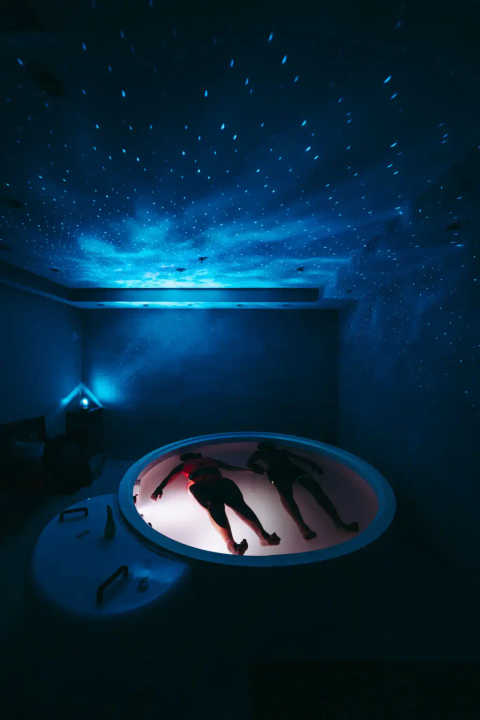
What to Expect from a 30-Minute Float Therapy Session in North Bethesda
By Journey Within Wellness Center / Spa | November 5, 2026
Serving North Bethesda, MD and nearby Rockville, Bethesda, Silver Spring, Kensington, Wheaton, and Chevy Chase.
One of my favorite things to hear after a visit is how the small details made it easy, like having ear plugs and even a pillow option available in the float space to help you settle in fast. A 30-minute float is a condensed sensory-reduction session where you float effortlessly in warm, Epsom-salt-saturated water. Many people feel immediate calm, reduced muscle tension, and clearer thinking within minutes. With simple aftercare, those benefits often carry into the next 24 to 72 hours.
If you’re around the Pike & Rose area or coming in through the North Bethesda Metro, this express float is a solid reset when a full hour just doesn’t fit. Below, I’ll walk you through what actually happens in a 30-minute session, what people notice right away, and how I recommend you spend the hour after your float.
Why a quick float therapy session works so well for screen fatigue and commuter stress
Most people who look for float therapy are not trying to “do more.” They’re trying to get their brain to stop buzzing and their body to unclench. Desk posture, constant screens, long commutes, and tight schedules can keep your nervous system stuck in high gear. A 30-minute float gives you a short, clean break from stimulation, plus a feeling of being supported that your joints and muscles tend to love.
I see a lot of first-timers who want to test the waters before committing to a longer session, and plenty of regulars who use the shorter float as a dependable midweek reset. If you’re also searching for massage therapy near me, floatation tank therapy fits right into that same “give my body a chance to downshift” category.
Quick reality check: A 30-minute float is short. It’s meant for fast relaxation and mental quiet. If your main goal is deep recovery or a longer meditative state, I’ll usually steer you toward a 60-minute float.
Choosing your float option: 60-minute Float Therapy or Couples Float
Even if you’re here for a 30-minute express session, it helps to know the two core float options I run most often. A lot of people start short, then move into a full hour once they realize how quickly their body lets go.
Float Therapy
This is my classic private float. You’ll float in warm, Epsom salt enriched water that supports your body fully, so gravity stops being the loudest thing your nervous system is responding to. People tell me the space feels peaceful and clean, and more than one person has been surprised they can actually fall asleep in the water.
Best for: stress reset, muscle tension, post-workout recovery, and anyone who wants that “hit the reset button” feeling.
Couples Float
This one is for two people floating at the same time, together. It’s a quiet, shared experience that tends to feel more connected than “let’s go do a thing and talk the whole time.” If you’ve been trying to get your partner to try float therapy, this is an easy way to make the first visit feel less intimidating.
Best for: couples who want a calm shared reset, first-timers who want moral support, and planned self-care dates before dinner at Pike & Rose.
Wondering what to pair with your float? A lot of people build a routine around floating and other recovery-friendly self-care. Floating is the quiet counterpart that gives your nervous system a different kind of break.
Real results people talk about after floatation tank therapy
I’m going to keep this grounded in what I hear and see day to day. People come in wanting to relax, but what they describe after is usually more specific. They talk about feeling lighter in their body, looser through the low back and neck, and calmer in their head. One regular described the salt float as “pure magic” and compared it to “hitting a reset button, ” which honestly matches what I see in the way shoulders drop after a session.
“The salt float was pure magic, so calming and refreshing, like hitting a reset button.”
one of our recent first-time visitors
Sleep is another big one. I’ve had more than a few people tell me they “slept wonderfully” after floating and that it was the deepest sleep they’d had in a long time. And if you’re combining floating with bodywork, people regularly mention walking out feeling better than when they walked in, sometimes even describing themselves as pain-free after a session.
If your goal is lower back pain or stress-related headaches, a short float can help by quieting the stress response and letting tight muscles ease up. It’s not a medical fix. It’s a practical way to interrupt tension patterns, especially when you’re carrying stress in your shoulders, jaw, or low back.
The 30-minute float therapy timeline, step by step (so you’re not guessing)
When you arrive, I keep check-in simple and I’ll answer the two big questions most first-timers have: “What do I do in there?” and “What if I don’t love it?” Then you’ll shower first. That’s a non-negotiable for hygiene, and it also helps you transition out of your day.
Next, you’ll get settled into your private float space. People appreciate that the rooms are clean and the setup is straightforward. Ear plugs are there if you want them, and I recommend using them if you’re sensitive to sound. You step into the warm water, lie back, and take a minute to find your balance. A lot of people say it takes a moment to get used to floating. That’s normal.
At the end, you’ll rinse off again, towel dry, and take a few minutes before jumping back into your phone. For a 30-minute float, I suggest giving yourself a little buffer time afterward. Even 10 quiet minutes can make the session feel like it lasted longer.
Local convenience note: If you’re coming in around Rockville Pike or the North Bethesda Metro, the shorter float is popular because it fits into a day that already has errands, work, and family schedules competing for space.
Aftercare that actually extends the calm for 24 to 72 hours
What you do after you float matters, especially with a 30-minute session. The goal is to keep your system in “downshift” mode instead of snapping right back into stress.
- Hydrate. Floating can leave you feeling pleasantly mellow, and water helps you hold onto that grounded feeling.
- Keep activity light for the rest of the day. Skip heavy exercise right after if you can. Let your muscles enjoy the reset.
- Give yourself 20 to 60 minutes to re-acclimate. If you’re heading back to work or driving into busier areas, that buffer helps you feel clear and steady.
- Jot a few notes. Some people feel reflective after floating. A quick journal entry helps you remember what came up once the day gets loud again.
What to bring: I recommend slippers. I’ll handle the rest, including towels and shower basics that make it easy to head back out without feeling rushed.
Why people stick with Journey Within in North Bethesda (and why first-timers relax fast)
I’ve been building Journey Within Wellness Center / Spa here in North Bethesda for the last two years, and I care about the parts that make your visit feel easy. People mention the friendliness at the front desk, the clean facility, and that the float rooms feel peaceful. I also hear about the practical stuff that matters, like easy parking, and little touches like offering water.
“I’ve gone twice now and plan to go back again soon. Very relaxing environment.”
one of our regulars
If you’re in the White Flint redevelopment area or you’re coming through Pike & Rose, an express float can be the difference between “I’ll get to self-care someday” and actually doing it this week. And if you’re building a routine that includes float therapy and bodywork, I’m happy to help you map out what makes sense so you don’t overdo it.
Ready for a short reset? If you want a 30-minute float therapy session that feels calm, clean, and well explained, book when you can also give yourself a little quiet time afterward. That’s the part people tend to thank themselves for.
Address: 11755 Rockville Pike, North Bethesda, MD 20852
Phone: +13018163292 | Email: carlos@jwrockville.com
Quick answers: 30-minute floats, claustrophobia, dry float therapy, and sensory deprivation
Is 30 minutes enough for first-time floaters?
Yes, for a lot of people it’s the right starting point. You get the feel of the water, the quiet, and the “how do I position my body?” learning curve without committing to a full hour. If you finish and immediately wish it were longer, that’s usually your sign to book 60 minutes next time.
How long does it take to feel the benefits of a 30-minute float?
Often within minutes. Many people notice their breathing slows down, their shoulders drop, and their mind stops racing as hard. Sleep and longer-lasting tension relief can keep improving over the next day or two, especially if you hydrate and keep the rest of your day lighter.
Will I feel claustrophobic inside a float tank?
If you’re prone to claustrophobia, tell me when you arrive and I’ll guide you toward the most comfortable setup. Many people feel better once they realize they control the experience. You can take your time getting in, adjust your position, and focus on steady breathing until your body realizes it’s safe to relax.
What should I do after a float session to extend the benefits?
Hydrate, keep activity light, and give yourself 20 to 60 minutes before jumping into intense work, traffic, or back-to-back meetings. If you feel reflective, write down a few notes. That simple pause is part of why people report better sleep after floating.
Can a short float help with lower back pain or stress-related headaches?
It often helps by reducing muscle guarding and stress tension. The buoyancy takes pressure off joints, and the quiet environment can calm the stress response that feeds headaches and tight necks. If you’re dealing with ongoing pain, pairing float therapy with bodywork is a common next step.
I’m searching “float therapy near me”, what should I look for?
Look for cleanliness, clear instructions for first-timers, and a setup that helps you relax instead of overthink. Practical touches like easy parking and a peaceful space matter more than people expect. You should also feel comfortable asking questions, especially if it’s your first float.
What is floatation tank therapy, exactly?
It’s floating in warm water saturated with Epsom salt so you’re buoyant and supported. The environment is intentionally quiet and low-stimulation, which helps your nervous system settle. People commonly use it for stress relief, recovery, and sleep support.
What is dry float therapy?
Dry float therapy usually refers to a floating sensation created on a membrane or surface without you getting in the water. In my space, floating happens in a tank with mineral-rich water, which is part of why people describe it as deeply relaxing and physically supportive.
Is float therapy sensory deprivation?
It can be. Many people describe the float as “true sensory deprivation” because the light and sound are reduced and your body feels weightless. You stay in control the whole time, and the goal is simple: fewer inputs so your brain and body can finally stop compensating.